
3 Groups Available

The Annapurna Base Camp (ABC) Trek is one of Nepal’s most beautiful trekking experiences, leading adventurers deep into the heart of the Annapurna region. Located within the Annapurna Conservation Area, Nepal’s largest protected area, the trek passes through picturesque villages, terraced farmlands, dense forests, and alpine landscapes before reaching Annapurna Base Camp at 4,130 meters.
The journey usually begins from the Pokhara area and follows trails through Ghandruk, Chhomrong, Dovan, Deurali, Machhapuchhre Base Camp (3,700 m), and finally Annapurna Base Camp. Depending on the route chosen, the trek covers approximately 70–110 kilometers round trip and is generally completed within 7 to 12 days.
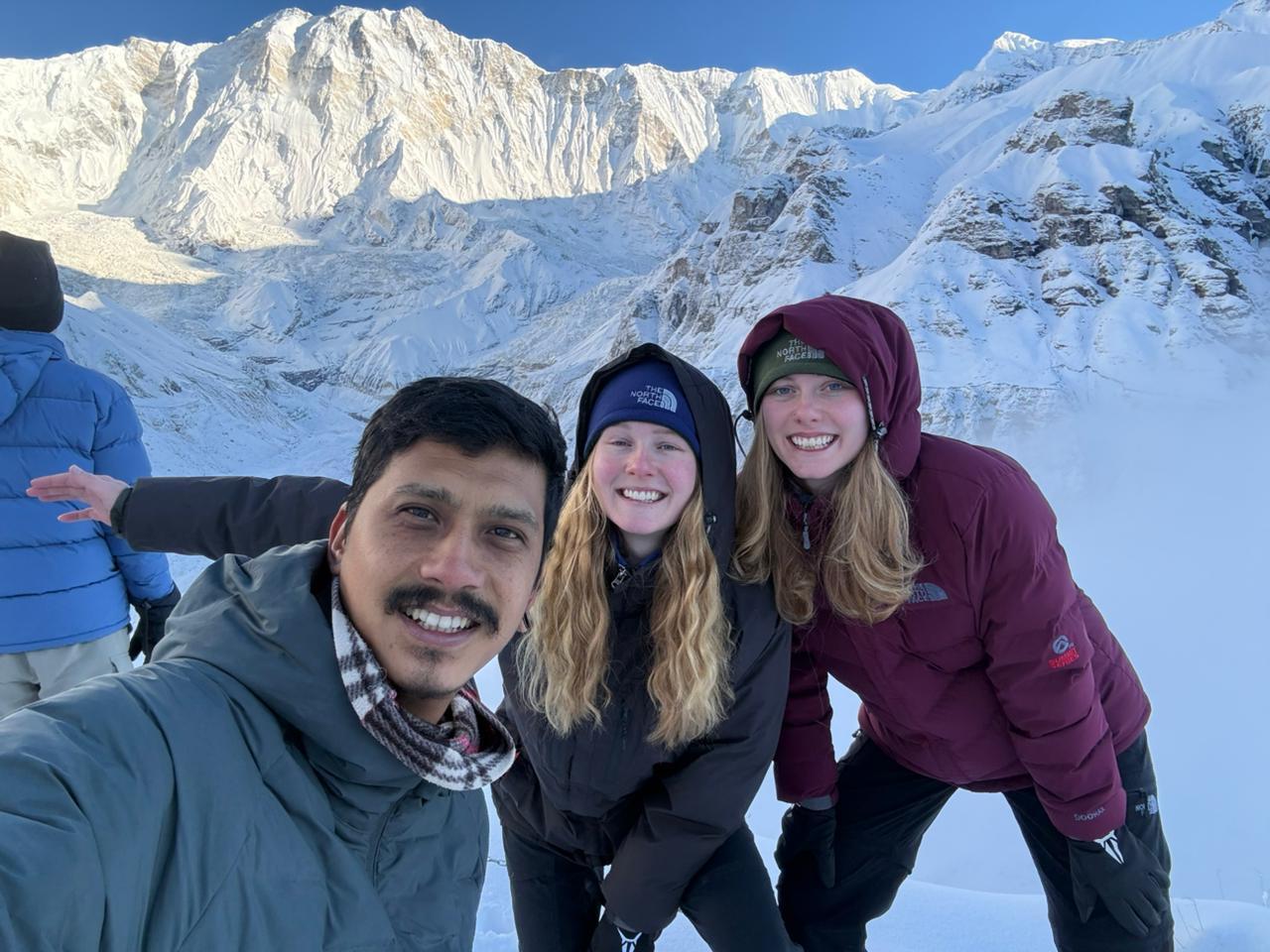
One of the highlights of the trek is the spectacular mountain scenery. Trekkers are surrounded by magnificent peaks including Annapurna I (8,091 m), Annapurna South, Hiunchuli, Machhapuchhre (Fishtail Mountain), and Gangapurna. The Annapurna Sanctuary forms a natural amphitheatre of snow-covered giants, creating one of the most breathtaking mountain panoramas in the Himalayas.
The region is home to diverse ethnic communities, particularly the Gurung and Magar people, who are known for their warm hospitality and rich cultural traditions. Hinduism and Buddhism are widely practiced, and visitors can observe traditional lifestyles, local festivals, monasteries, temples, prayer flags, and stone shrines along the route. The mountain communities maintain a close relationship with nature and their ancestral customs.
Major attractions of the trek include the traditional Gurung village of Ghandruk, the scenic settlement of Chhomrong, the lush rhododendron forests, Machhapuchhre Base Camp, and the stunning Annapurna Base Camp itself. Many itineraries also include Poon Hill (3,210 m), a famous viewpoint known for its sunrise views over the Annapurna and Dhaulagiri ranges.
The Annapurna Conservation Area contains rich biodiversity and varied vegetation. Lower elevations feature subtropical forests, terraced farms, bamboo groves, and rhododendron woodlands, while higher elevations consist of alpine meadows and rugged mountain terrain. Local people depend on farming, livestock rearing, tourism, and trade for their livelihoods.
Mules and pack animals are commonly used to transport supplies along the lower trails, while yaks and crossbreeds are found in higher alpine areas. The conservation area is also home to remarkable wildlife, including the Himalayan Thar, Musk Deer, Himalayan Monal, Langur monkeys, Himalayan Black Bear, and the elusive Snow Leopard.
In conclusion, the Annapurna Base Camp Trek is more than a mountain journey. It is an unforgettable experience through the natural beauty, cultural diversity, traditional lifestyles, rich vegetation, and wildlife of the Himalayas, culminating in the spectacular Annapurna Sanctuary beneath some of the world’s highest peaks.
Tap a day to expand the details.
Transfer from the trailhead and begin walking into the Annapurna region, settling into the first overnight stop.
A full trekking day through changing scenery, with stops in local villages along the way.
A full trekking day through changing scenery, with stops in local villages along the way.
A short excursion nearby to aid acclimatization, followed by an easy afternoon at altitude.
A full trekking day through changing scenery, with stops in local villages along the way.
A full trekking day through changing scenery, with stops in local villages along the way.
A full trekking day through changing scenery, with stops in local villages along the way.
A short excursion nearby to aid acclimatization, followed by an easy afternoon at altitude.
The main scenic highlight of the Annapurna Base Camp, reached after an early start.
Final travel day back to the start point, with time to rest before your onward journey.
1 review
Log in to share your experience of this trek.
Jessica Bennett
The price we booked at was the price we paid — no surprises anywhere along the way.