1 date open
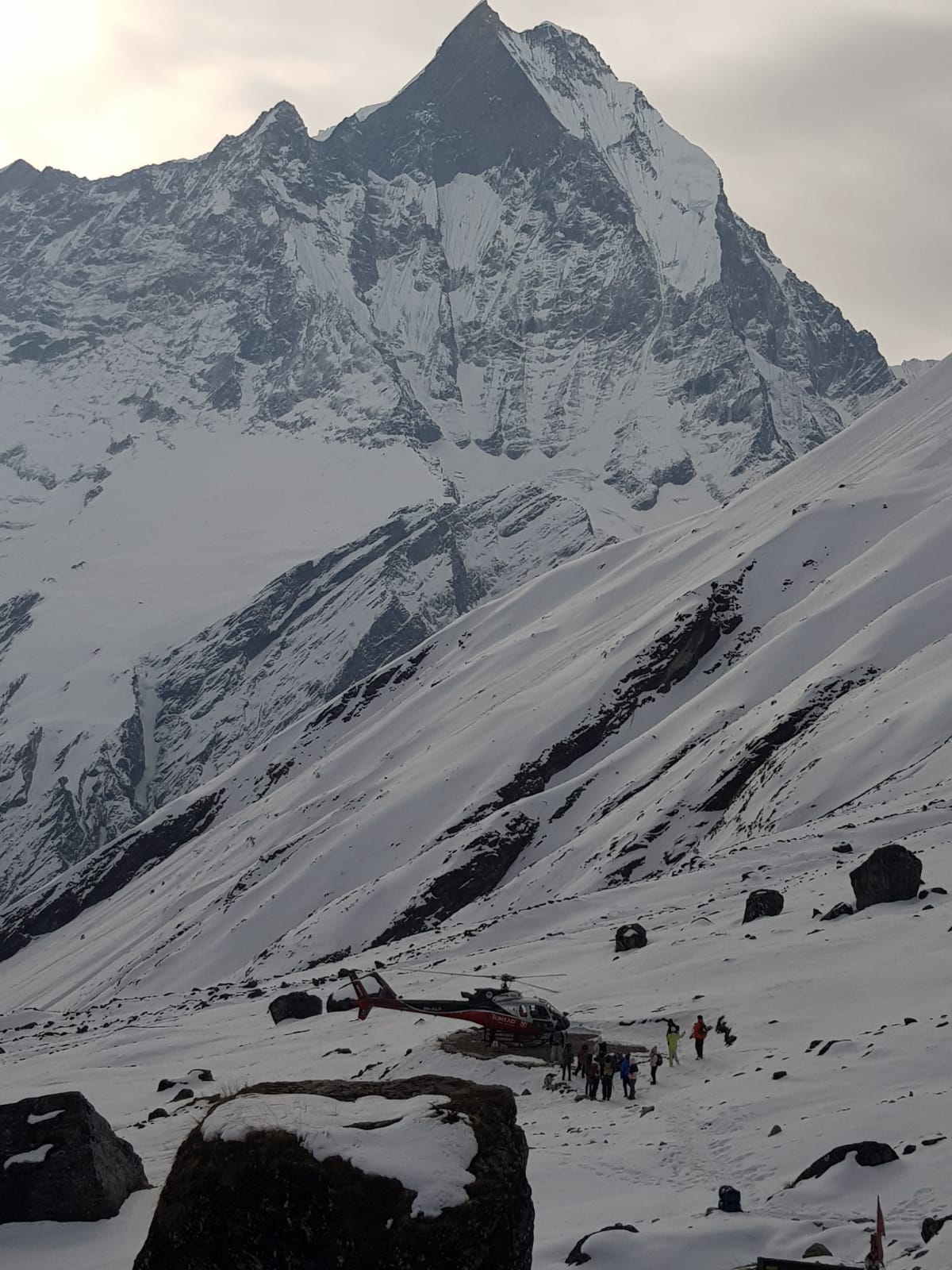
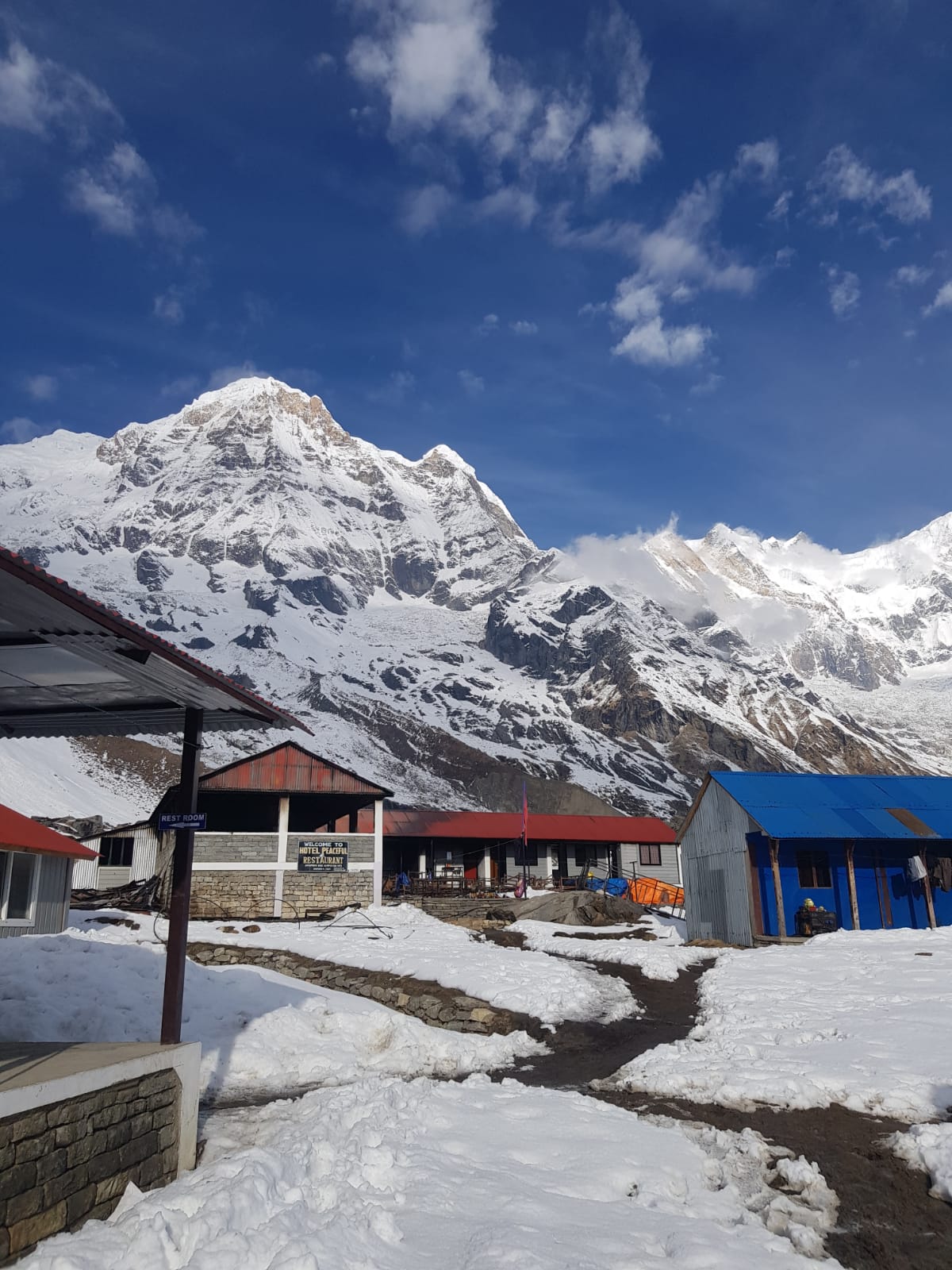
The Everest Base Camp (EBC) Trek is one of the world's most iconic trekking journeys, located in Nepal's Khumbu region within Sagarmatha National Park, a UNESCO World Heritage Site established in 1976 and recognized by UNESCO in 1979.
The trek passes through a spectacular Himalayan landscape shaped by tectonic uplift, glaciers, deep valleys, and rugged mountains. Trekkers walk alongside the famous Khumbu Glacier and experience diverse ecosystems ranging from rhododendron forests to alpine meadows and permanent snowfields.
The Everest region gained worldwide fame after the first successful ascent of Mount Everest by Sir Edmund Hillary and Tenzing Norgay in 1953. Since then, the trail to Everest Base Camp has become a symbol of adventure, exploration, and mountaineering achievement.
The trek offers breathtaking views of some of the world's highest and most beautiful mountains, including:
The Khumbu region is the homeland of the Sherpa people, who practice Tibetan Buddhism and are renowned for their hospitality, resilience, and mountaineering skills. Ancient monasteries such as Tengboche Monastery, colorful prayer flags, mani walls, and chortens reflect the region's deep spiritual traditions. Religious harmony and respect for nature are integral parts of daily life.
Besides Sherpas, the broader region is home to ethnic groups such as Rai and Tamang. Communities value cooperation, mutual respect, honesty, hospitality, hard work, and environmental stewardship. Traditional customs and strong family ties continue to shape social life.
Domestic animals such as yaks, dzopkyos, and pack animals play a vital role in transportation and local livelihoods. The region also supports remarkable wildlife, as Snow leopard, red panda, Himalayan tahr, Musk deer, Himalayan black bear, Himalayan monal (Danphe, Nepal's national bird). These species thrive within the protected ecosystems of Sagarmatha National Park.
Tap a day to expand the details.
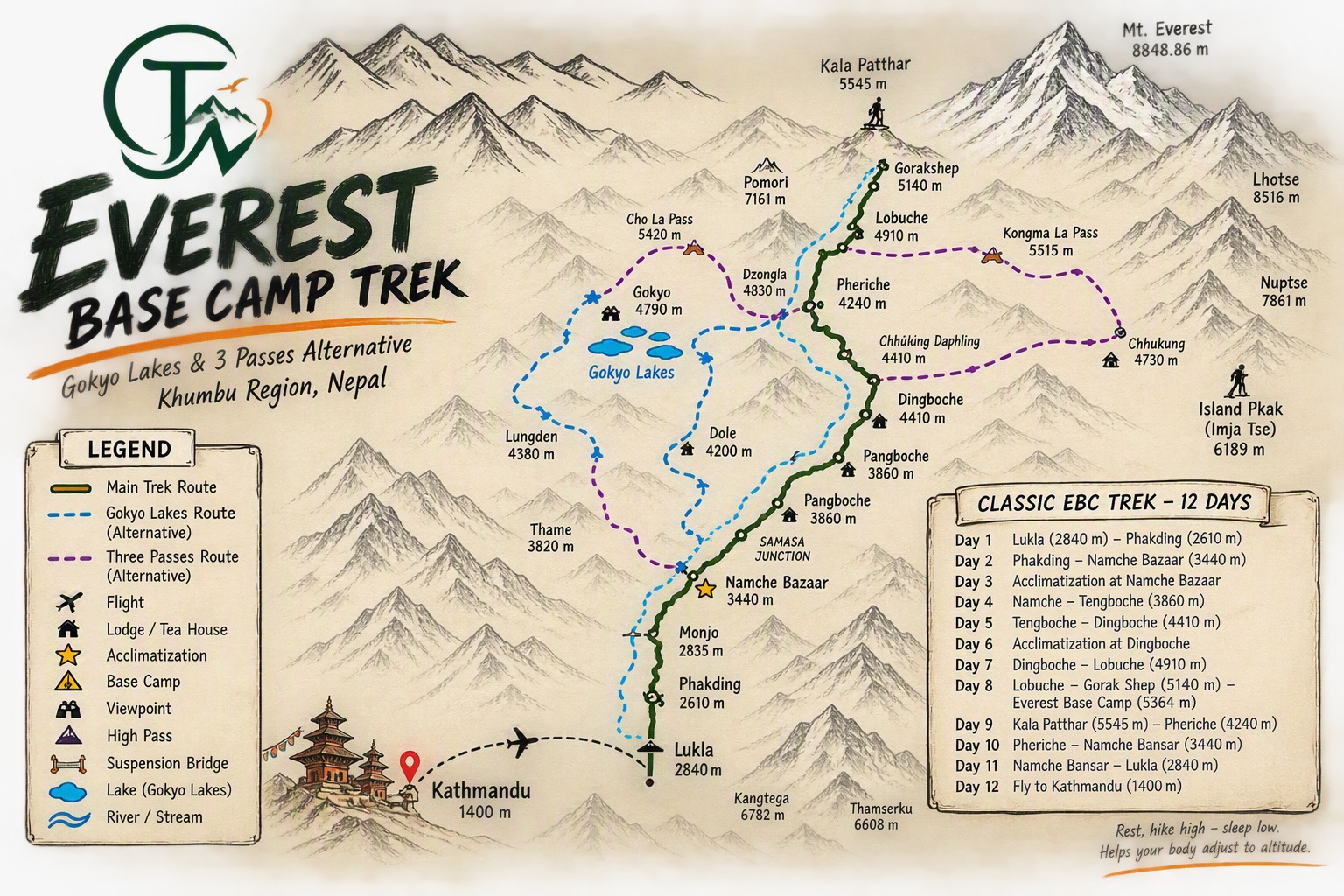
In a very first exciting day of Trek there is 25 mins drive to Kathmandu airport and fly to Lukla (Tenzing Hilary Airport) at 2800m for about 35-40 mins. Leaving the Lukla to Phakding you will pass level above the village Kyangma,Muse,Chaurikharka and Cheplung after around 40-50mins of walk. After continuing north of Cheplung there is first view of dudhkoshi river.
After breakfast we will continue up the west banks of the Dudh Kosi river, crossing it twice by small suspension bridges before reaching the village of Monjo, the entrance gate of the Sagarmatha National Park. When entering the National park boundary we descend and a gradual walk brings us to the suspension bridge over the Bhote-Koshi river to Jorsalle village, the last village till Namche Bazaar with many ascents and descents. Namche is a prosperous trading town and the capital of the Khumbu Region. Overnight.
We will spend a day in Namche Bazaar to acclimatized the altitude of (3,440m/11,283ft). Namche is a wonderful place, and it is worth visiting the local market in Namche which sells everything from toothpicks to ice axes. You have full day leisure or visit Everest Viewpoint hotel for wonderful panoramic view or Sherpa Museum as well a great place to learn Sherpa culture and history of mountaineering. You can also do the day hike for the ancient village, Khumjung valley with the monasteries and preserved yeti sculpture as proof of existence of Yeti in Everest mountainous zone.
Today after breakfast we ascend out of the village and follow a high, fairly level path above the Dudh Koshi enjoying spectacular mountain views of Everest, Nupse, Lhotse, Thamserku and Kwangde as we go. The trail descends through forest of blue pine to cross the Dudh Kosi again at Phunki Thanga (3250m). We make another ascent on a switch-back trail, sometimes made quite dusty by yak trains, to reach the spectacularly sited Tyangboche Monastery from where there are brilliant views of Everest, Lhotse, Nuptse, Ama Dablam and Taboche to the north and northeast Thamserku and Kantega to the southeast and Kwangde to the southwest. Thyangboche Monastery was seriously damaged by fire in 1989 but has since been rebuilt and there will be time to visit the monastery and interact with monks.
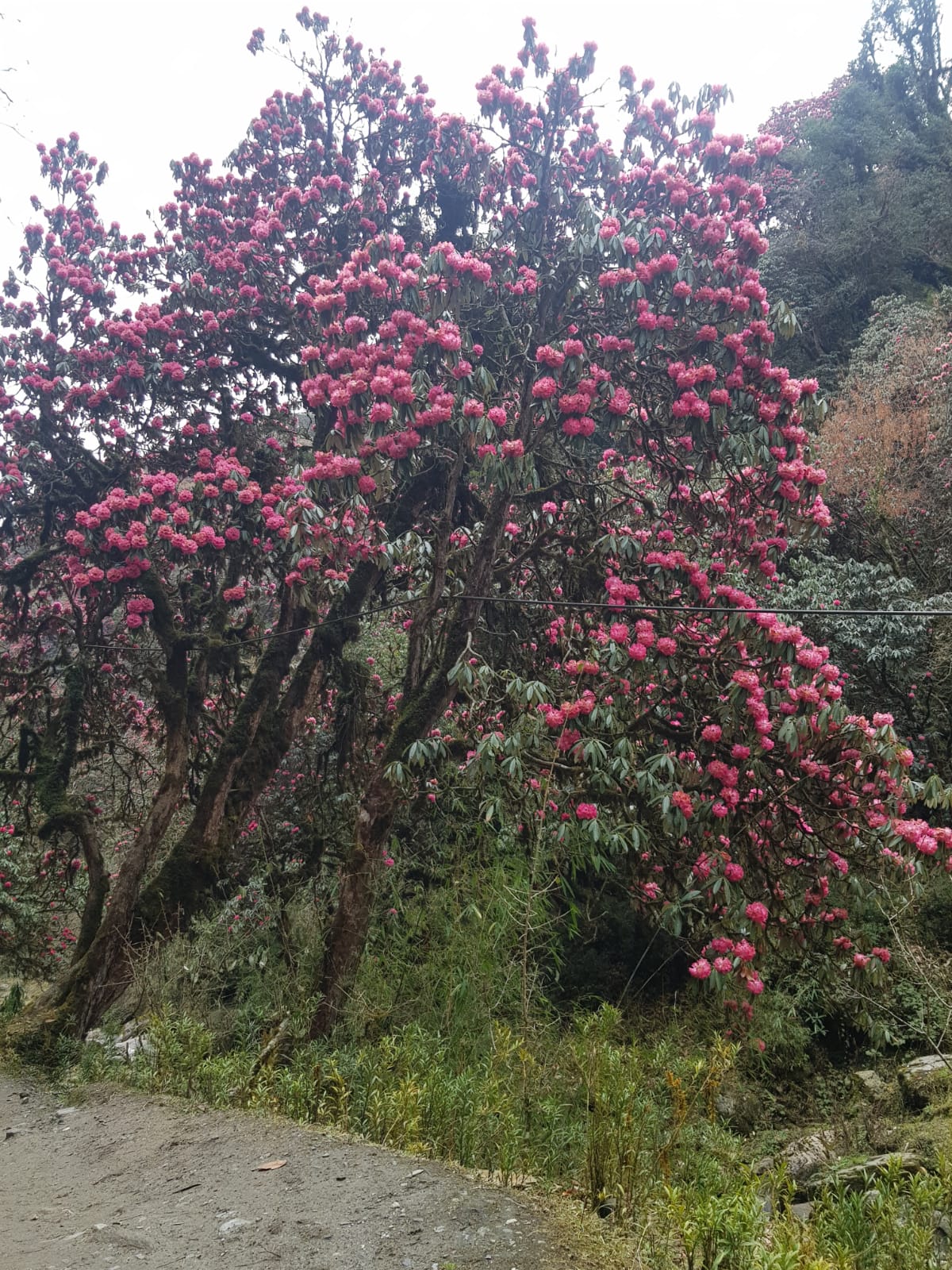
After breakfast we descend through meadows and rhododendron forest, past the Buddhist nunnery at Deboche, to the Imja Khola. Hug the valley wall, and then traverse the plains to Dingboche, the start of the Imja Tse Valley. Dingboche is also the gateway to Chukung and farther beyond for the most challenging traverses towards Makalu area and Hinko Valley via Sherpani col 6,100m and Amphu Laptsa pass 5,780m and Island Peak itself.
On this day you will rest before the last leg of the journey. You may have full day rest or there are some places where you can go for a day walk like trek to a hill or Chhukung (4,730m) is worthwhile which takes approx. 3-4 hours from Dingboche, towards east with in the Imjatse Valley, although the trek is gradual, however you can feel the thin air as the altitude gains slowly coming towards Chhukung. At Chhukung, there are few teahouses overlooking superb view of the snowcapped peaks and glaciers. After enjoy stroll back to Dingboche overnight.
The trail from Dingboche climbs onto the wide, open Khumbu valley, gaining height gradually over grassy slopes with Ama Dablam, Taboche and Cholatse all in view. At Thukla the path steepens for a hard forty-five minutes up the terminal moraine of the Khumbu glacier to Thukla Pass, where rows of stone memorials stand for climbers who died on Everest, including Scott Fischer and Babu Chiri Sherpa. It is a sobering place and most groups stop quietly for a while. From there the route levels off beside the glacier to the handful of lodges at Lobuche.
After breakfast, our trek starts with a gentle ascent initially which later develops into a steeper ascent of about half an hour. A descent back down then brings us through the windy and rocky trial with the wonderful view of Mt. Pumori, Mt. Nuptse and other magnificent peaks to Gorak Shep where we will check into our lodge. After lunch, our adventure continues towards Everest Base Camp and to the Khumbu Icefall. The trail passes through over rocky dunes and moraine and streams, till you reach the base camp. In Everest Base Camp the climbers gather for summiting Everest during the high expedition season. We explore base camp and its surroundings glacier, and we will retrace our steps back to Gorakshep for overnight.
Your Guide will arrange time for this morning to start early hike up to Kala Pathar for the most wonderful sunrise views of Everest. It takes about 2 hours to reach this hilltop (the famous viewpoint). This small peak offers the best views of Mount Everest, Nuptse, Pumori and Ama Dablam along with the entire mountain views of Khumbu Himalayan range. After taking in this fabulous sight we will head back down again back to Gorak Shep, breakfast and retrace back towards Pheriche for overnight
After breakfast we are heading down now, the trail is mostly downhill as we travel to Pangboche. Pangboche is the highest year-round settlement in the upper Khumbu valley. When we reach here, we have the chance to visit the Pangboche monastery, the oldest monastery of the region. Take back great memories with you and walk downhill towards the Phungithanka and stop back to Tengboche overnight. After lunch we are heading down now, and after crossing the suspension bridge over the Dudh Koshi river trek onwards to Kyanjuma the junction of the trinity ways to Gokyo Valley, Khumjung village and Namche Bazar. Great view of Ama Dablam, Thamserku, Tawache and Lhotse as well as dense wildlife of some species of Pheasants, Himalayan Griffons, Musk deer and wild goat can be found insides the rhododendron forest, take back to Namche Bazar for overnight rest.
Today after breakfast we walk back to the downhill at Phakding and make lunch break, after lunch and slight rest you can walk at your own pace and enjoying the lush green scenery around and passing through the incredible mountain scenery and local Sherpa village. Arrival in Lukla and you'll have time to stroll around the areas, and guide will re-confirm your flight ticket and enjoy the last celebration dinner with your crewmember and overnight at hotel.
The final morning starts early, as Lukla’s flights leave before the wind picks up in the valley. The short flight back to Kathmandu traces the ridgelines you walked in on, with the Dudh Koshi falling away beneath the wing and the Khumbu peaks lined up on the horizon in clear weather. After landing you are transferred to your hotel, where the rest of the day is free to shower, repack and rest, or shop for souvenirs in Thamel. Your guide and crew say their goodbyes here, usually over a last meal together in the evening.
Altitude sickness can occur when your body struggles to adjust to high elevations and lower oxygen levels. During the Annapurna Base Camp Trek, you may experience symptoms such as headache, dizziness, nausea, tiredness, or difficulty sleeping. Stay hydrated, ascend gradually, and inform your guide immediately if you feel unwell. Planning your Annapurna Base Camp adventure with an experienced local trekking company can make your journey more organized and enjoyable. If you are looking for a trusted trekking company in Nepal, our team at Mountain Mate Trek is available to help you plan and experience your Himalayan adventure at www.mountainmatetrek.com
1 review
Log in to share your experience of this trek.
Mahesh giri
best sites for trip booking in Nepal
We did Everest base camp trek within the best group join price and professional and friendly crew members.
100% commission free
100% recommended to make trip booking in Nepal.