4 Groups Available
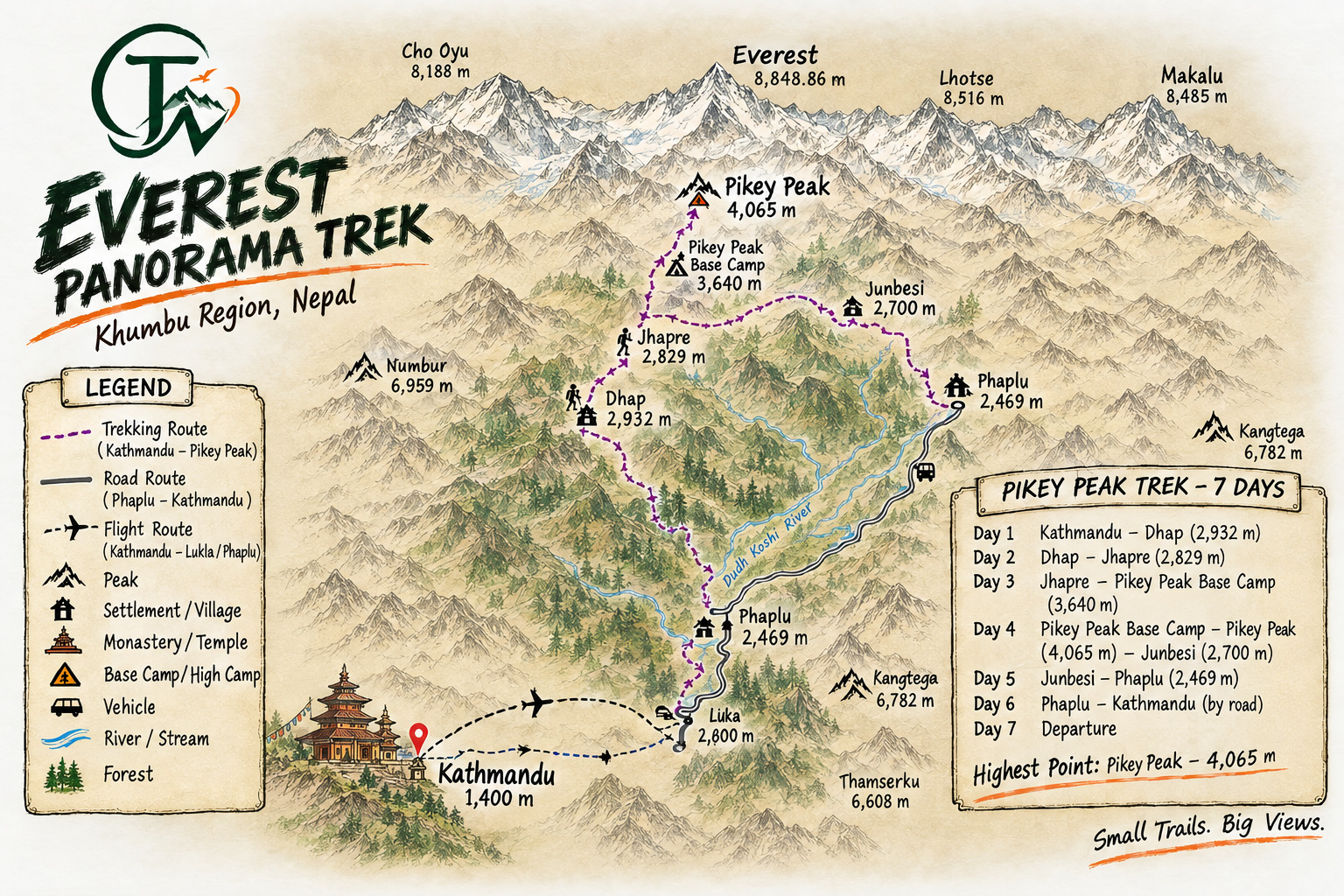
The Everest Panorama Trek is a relatively short and scenic trekking journey in the Everest region of Nepal, designed for travelers who want to experience the spectacular Himalayan landscapes and Sherpa culture without undertaking the longer Everest Base Camp trek. The route combines mountain views, traditional villages, Buddhist monasteries, and the unique atmosphere of the Khumbu region.
The trek generally begins with a scenic flight from Kathmandu to Lukla, followed by a gradual trek through forests and traditional mountain settlements. One of the major stops is Namche Bazaar, the vibrant trading and acclimatization center of the Everest region. Surrounded by dramatic mountain scenery, Namche provides an excellent opportunity to experience local Sherpa culture and explore the surrounding villages.
From Namche, the trail typically continues toward Tengboche, home to the famous Tengboche Monastery and one of the most impressive viewpoints in the Khumbu. The monastery is an important center of Tibetan Buddhism, and the surrounding landscape offers magnificent views of Mount Everest, Ama Dablam, Lhotse, Nuptse, and other Himalayan peaks.
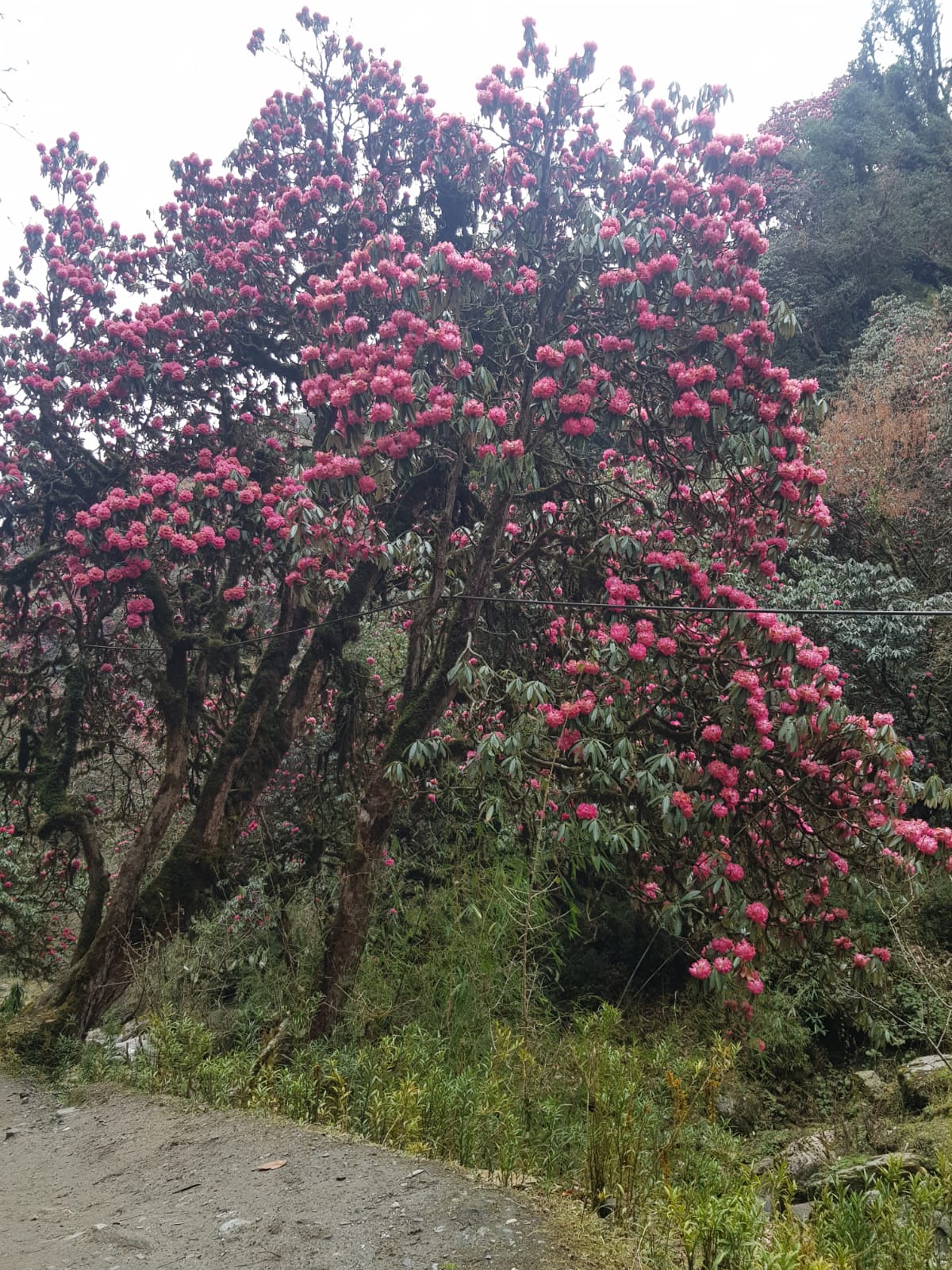
The trek passes through beautiful forests containing rhododendron, pine, and fir trees, particularly in the lower sections of the route. As the trail gains elevation, the landscape gradually changes into rugged mountain terrain, with panoramic views opening toward the high Himalayas.
A major attraction of the Everest Panorama Trek is that it provides impressive views of Mount Everest and surrounding peaks without requiring trekkers to reach the extreme elevations associated with Everest Base Camp. The route generally stays around the lower and middle elevations of the Khumbu, making it a suitable option for travelers with limited trekking time who still want a genuine Himalayan experience.
Much of the journey takes place within Sagarmatha National Park, a protected area and UNESCO World Heritage Site. The region is known for its dramatic mountain scenery, Himalayan biodiversity, Buddhist heritage, and traditional Sherpa settlements.
The Everest Panorama Trek is ideal for travelers seeking a shorter Himalayan adventure that combines spectacular mountain views, Sherpa culture, Buddhist monasteries, traditional villages, and the iconic Everest region. Its relatively short duration and moderate altitude make it an attractive alternative for those who do not have enough time for a longer Everest Base Camp or high-pass trekking adventure.
Tap a day to expand the details.
Today is the first day of the trek and our destination is Monjo. We will be escorted in a private vehicle to the Tribhuvan Internation Airport to board an early morning flight to Lukla. After 30-35 mins the plane will finally land at the Lukla Airport (Tenzing Hillary Airport). On reaching the airport, we will be introduced to other crew members awaiting our arrival. At the same time luggage will also be prepared for the porters. Once everything is ready, the ultimate trek finally begins towards the destination of the day, Monjo, leaving Lukla behind. After four hours of downhill and flat trail experience, we reach Phakding. From here walk through few suspension bridges and small settlements finally takes us to the gateway of Sagarmatha National Park, Monju. The night will be spent at a lodge in Monjo.
Today is the second day of the trek and our destination is Namche Bazaar. Today the trail enters Sagarmatha National Park. Our team leader will take care of the necessary national park formalities at the entrance. Then, we enter the national park from where a vertical drop down the hill will bring us across few suspension bridges. On crossing these bridges the trail leads us uphill towards Namche Bazaar that offers the first view of Mt. Everest along with other peaks. The night will be spent at a lodge in Namche Bazaar.
Today is the third day of the trek and we spend our day exploring the Namce Bazaar. We get involved in the activities that help us to adapt to the change in altitude and thinning air. Remaining active is the best way to acclimatize. Therefore, instead of resting, we hike to Thame. Thame is an old Sherpa village. We also have an option to visit Khumjung, Khongde or Khunde which further aids in acclimatization. Namche bazaar offers varieties of options to spend the day. Hence, remaining days can either be spent visiting the National Park Head office, Museum and other nearby monasteries. Or you can also spend some quality time at cafes and bakeries or talking to your family making internet calls. The night will be spent at a lodge in Namche Bazaar.
Today is the fourth day of the trek. We first walked along the glacial water of Dudh Khoshi. Enjoying the views of Mt. Everest, Mt. Nuptse, Mt. Lhotse and Ama Dablam, we continue towards the Rhododendron forest walk through the forest and finally reach Sanasa – a major trail junction to Gokyo valley and Everest Base Camp. From here, we take a steep ascent that will eventually take us to the destination of the day, Tengboche. The remaining days will be spent exploring the Tengboche monastery. The night will be spent at a lodge in Tengboche).
Today is the fifth day of the trek and our destination is Phakding. After attending the morning ceremony at the Tengboche monastery, a steep descent from Tengboche leads us to the Dudhkoshi River. We cross the bridge across the Dudh Koshi River at Phunki Tenga, pass Tashinga and Sansa village before reaching Kyangjuma. Then an easy walk will take us to Namche Bazaar from where the trail drops down the hill to the suspension bridge near the confluence of Dudh Koshi and Bhote Koshi rivers. We cross the bridge toward the entrance of Sagarmatha National Park at Monjo. After some formalities at the check post we continue walking until we reach Phakding.
oday is the last day of the trek and our destination is Lukla. We continue our walk through the flat trail enjoying open plains, rhododendron and pine forest, Sherpa villages, prayer stones, and flapping prayer flags. We then finally reached Lukla. Loaded with the memories, on reaching Lukla you can either opt for some alone time or spend your time with other crew members. The night will be spent at a lodge in Lukla.
Today, the last day in the Khumbu region of Nepal. Our Sherpas will carry your luggage to the airport while other formalities will be taken care of by your team leader. Once the plane lands at the airport, we will directly board the plane and fly back to Kathmandu early in the morning enjoying the scenic view once again from the sky. A comfortable private vehicle will be awaiting your arrival at Kathmandu Airport, which will safely escort you to the hotel. In the evening we meet for some time to discuss your trek and get feedback. The night will be spent at a tourist standard hotel in Kathmandu.
Altitude sickness can occur when your body struggles to adjust to high elevations and lower oxygen levels. During the Annapurna Base Camp Trek, you may experience symptoms such as headache, dizziness, nausea, tiredness, or difficulty sleeping. Stay hydrated, ascend gradually, and inform your guide immediately if you feel unwell. Planning your Annapurna Base Camp adventure with an experienced local trekking company can make your journey more organized and enjoyable. If you are looking for a trusted trekking company in Nepal, our team at Mountain Mate Trek is available to help you plan and experience your Himalayan adventure at www.mountainmatetrek.com
No reviews of this trek yet — if you have trekked it, yours would be the first.
Log in to share your experience of this trek.