4 Groups Available
The Jiri to Everest Base Camp Trek is a classic approach to the Everest region that follows the historic trail used by early mountaineering expeditions before the construction of the airport at Lukla. Starting from Jiri, the route provides a longer and more gradual journey through the hills and mountains of Nepal before joining the traditional Everest Base Camp trail in the Khumbu region.
The trek begins with a scenic drive from Kathmandu to Jiri, a historic hill town in Dolakha District. From Jiri, the trail passes through beautiful forests, terraced farmland, small settlements, and traditional mountain villages before gradually gaining altitude. This lower-altitude section provides trekkers with an opportunity to experience the diverse landscapes and rural lifestyle of the Nepalese Himalayas.
As the route continues toward the Khumbu, trekkers pass through settlements such as Bhandar, Sete, Junbesi, and Nuntala, eventually reaching Namche Bazaar, the major commercial and acclimatization center of the Everest region. The trail also passes through areas inhabited by the Sherpa people, offering opportunities to experience traditional Sherpa culture, Buddhist monasteries, prayer flags, mani walls, and mountain communities.
The Jiri route is particularly rewarding because of its gradual approach to high altitude. Rather than flying directly to Lukla, trekkers spend several additional days ascending through lower valleys and ridges. This longer approach allows travelers to experience a wider range of Nepal's landscapes, from subtropical forests and agricultural terraces to alpine valleys and rugged Himalayan terrain.
After joining the main Everest trail, the journey continues through famous settlements including Tengboche, Dingboche, and Lobuche before reaching Everest Base Camp. The trek can also include an ascent of Kala Patthar, one of the most popular viewpoints for panoramic views of Mount Everest, Nuptse, Pumori, and the surrounding Himalayan peaks.
Much of the route lies within Sagarmatha National Park, a protected Himalayan area and UNESCO World Heritage Site. The park is known for its dramatic mountain landscapes, glaciers, forests, and diverse Himalayan wildlife.
The Jiri to Everest Base Camp Trek is longer and generally more demanding than the standard Lukla-to-Everest Base Camp route because of its additional trekking days and repeated ascents and descents. However, it offers a more gradual introduction to the Everest region and allows trekkers to experience the historic trail, traditional villages, diverse landscapes, and rich Sherpa culture before reaching the iconic Everest Base Camp.
For travelers who want to experience the historic Everest approach, spend more time away from the main trekking route, and gradually journey from the middle hills into the high Himalayas, the Jiri to Everest Base Camp Trek provides a particularly rewarding alternative to flying directly to Lukla.
Tap a day to expand the details.
Today you will be escorted to the bus station to catch an early morning bus to Jiri. The bus will then head northeast, leaving Kathmandu valley passing Bhaktapur, Banepa, Dhulikhel, Dolalghat, Lamasanghu along the Arniko Highway. Turning right from Lamasanghu we head towards Jiri, which is a town named after Jirel, the major inhabitants in and around this place. It’s a long drive in a single lane road; therefore, stop twice before reaching Jiri. In the evening we explore this town and the night will be spent at a lodge in Jiri.
Today is the first day of the trek and our destination is Shivalaya (the abode of Lord Shiva). The walk begins climbing a steep rocky and dusty path that leads us towards the ridge at Chitre that greets us with a distant view of snowcapped peaks which will lift our spirits after a hard climb. The trail then drops down to the riverside to cross the suspension bridge, which finally takes us to the bottom of the valley, Shivalaya (1,770m). We spent the rest of the time exploring the village of Shivalaya. The night will be spent at a lodge in Shivalaya.
Today is the second day of the trek and our destination is Bhandar which is We start with a steep uphill climb that will take us to Deurali (pass at an altitude of 2,710m) at the top of the hill, which then, steeply drops to Bhandar on the other side of Deurali through the forest. The remaining day will be spent exploring the Gompas and twin Stupa. The night will be spent at a lodge in Bhandar.
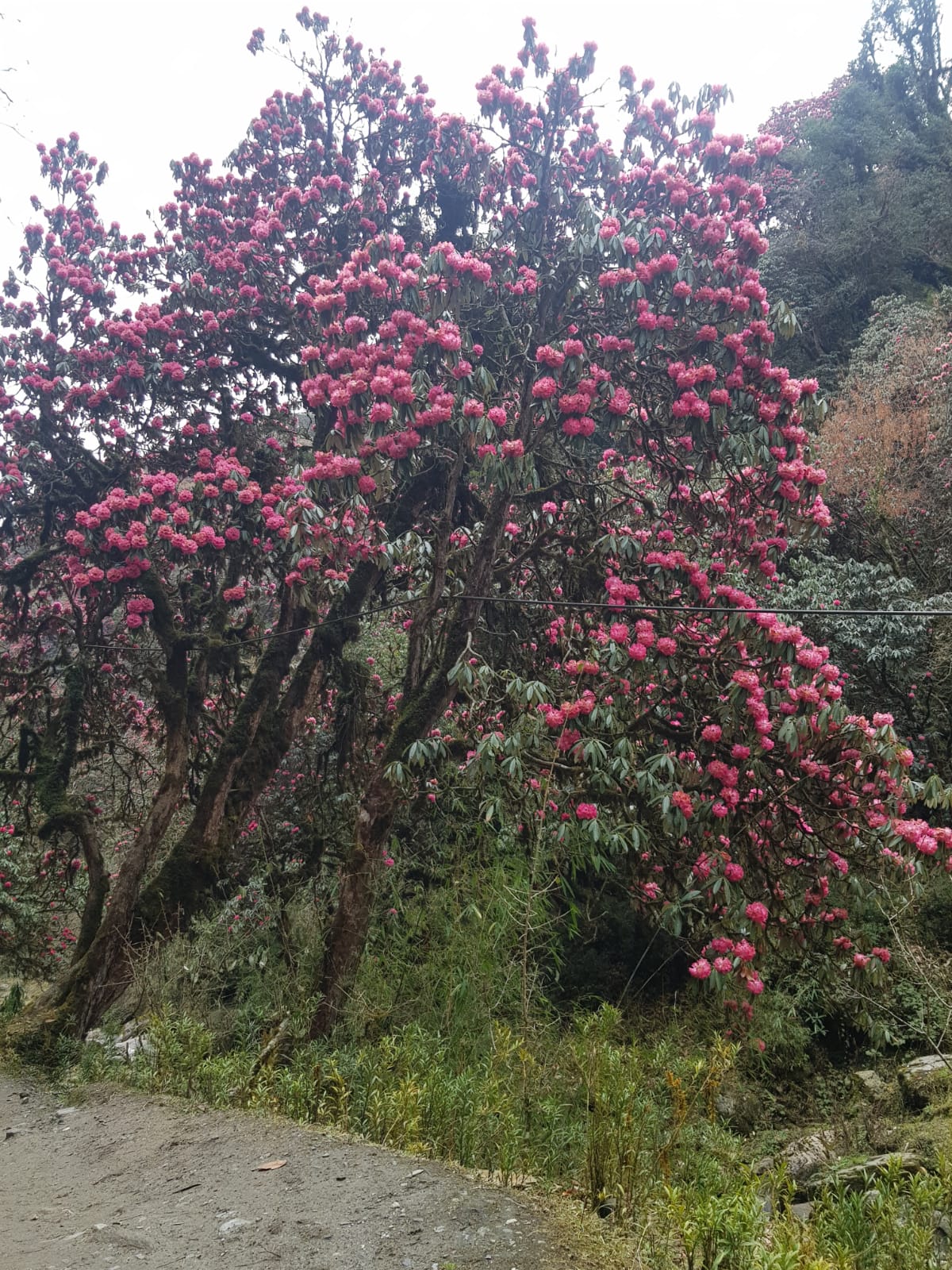
Today is the third day of the trek and our destination is Sete. The trail first descends towards valley passing small settlements of Dokharpa, and Baranda. Then few up and down hill walk through the forest to Likhu Khola. We cross the bridge over the river and continue to walk to Likhu Khola Valley and then climb a ridge to ascend to Kinja. From here, one more vertical climb will take us to Chimbu and finally the walk continues till Sete which is situated on the ridge in the middle of the Rhododendron forest. The night will be spent at a lodge in Sete.
Today is the fourth day of the trek and our destination is Junbesi. We start our day with a steep climb through Rhododendron, Pine, Birch, Magnolia and Juniper Forest, accompanied by few small, scattered farmhouses and tea houses up till Lamjura pass. Here we stop for some time to enjoy the panoramic view of surrounding green hills. The trail then descends towards Tragdobuk through the forest and finally drops down to the Sherpa village Junbesi. The night will be spent at a lodge in Junbesi.
Today is the sixth day of the trek and our destination is Nunthala. We cross the wooden bridge across Junebesi River that is below Junbesi and reach a trail junction. Following the trail to Khumbu lying on our left-hand side, we climb up the forest and descent to Phurteng that greets us with the first view of Mt. Everest along with other mountains. We continue up till Salung, cross Gongbo River and then descend to Ringmo River. From here, we walk up to Ringmoo village, cross Trakshindo La pass (3,670m) and walk down to Trashingo. From here, a final descent through conifer and rhododendron forest and terraced fields will finally bring us to the destination, Nunthala. The night will be spent at a lodge in Nunthala.
Today is the seventh day of the trek and our destination is Kharikhola. The trail descending downwards to the Dudh Koshi River continues till the bridge, which then crosses the bridge across the river and continues the climb to Jubing through the forest and terraces and then straight to Churkha. From here, an eastward steep climb will take us to a Sherpa village of Khari Khola. The night will be spent at a lodge in Khari Khola.
Today is the eighth day of the trek and our destination is Paiya. From Khari Khola, the trail first descends to cross a suspension bridge and from here a steep ascend will take us to Bupsa. From Bupsa the trail further rises towards the Kari La pass-through woods crossing Kharte. From here the trail is accompanied by a few tea shops until we reach Paiya. The night will be spent at a lodge in Paiya.
Today is the ninth day of the trek and our destination is Phakding. From Paiya, a winding trail will lead us to Surke. From Surke, we climb north towards Chaurikharka which is commonly known as the breadbasket of Khumbu region because of the fertile land. From here, the trail joins regular Everest Base Camp trail at Lukla which then heads towards Phakding. The night is spent at a lodge in Phakding.
Today is the tenth day of the trek and our destination is Namche Bazaar. Today, leaving Phakding we move towards Monju - gateway to the Sagarmatha National Park, crossing a few suspension bridges and small settlements. On reaching Sagarmatha National Park, your team leaders will take care of the necessary national park formalities at entrance while you enjoy small tea houses and shops. We then enter the national park from where a vertical drop down the hill will bring you across few suspension bridges. On crossing these bridges the trail leads you uphill towards Namche Bazaar that offers the first view of Mt. Everest along with other peaks. The night will be spent at a lodge in Namche Bazaar.
Today is the eleventh day of the trek, and we spend the day exploring Namche Bazaar. We get involved in the activities that help us to adapt to the change in altitude and thinning air. Remaining active is the best way to acclimatize. Therefore, instead of resting, we hike to Thame. Thame is an old Sherpa village. We also have an option to visit Khumjung, Khongde or Khunde which further aids in acclimatization. Namche bazaar offers varieties of options to spend the day. Hence, remaining days can either be spent visiting the National Park Head office, Museum and other nearby monasteries. Or you can also spend some quality time at cafes and bakeries or talking to your family making internet calls. The night will be spent at a lodge in Namche Bazaar.
Today is the twelfth day of the trek. We first walked along the glacial water of Dudh Khoshi. Enjoying the views of Mt. Everest, Mt. Nuptse, Mt. Lhotse and Ama Dablam, we continue towards the Rhododendron forest walk through the forest and finally reach Sanasa – a major trail junction to Gokyo valley and Everest Base Camp. From here, we take a steep ascent that will eventually take us to Tengboche monastery. The night will be spent at a lodge in Tengboche monastery.
Today is the thirteenth day of the trek and our destination is Dingboche. Starting our walk from Tengboche, ramble half an hour downhill towards the river and then continue the walk through the lush forest, cross the river and ascend to Pangboche, which is valley’s highest year-round settlement. After lunch, we climb up all the way through alpine meadows and yak herds until we reach Dingboche. The night will be spent at a lodge in Dingboche.
A second acclimatisation day, and an important one at 4,410m. The recommended outing is the steep climb up Nangkartshang Hill directly behind the village, gaining around 700 metres in a few hours and giving a superb panorama of Makalu, Lhotse, Ama Dablam and Island Peak at the head of the Imja valley. An easier alternative is the walk up the Imja valley towards Chhukung, gaining height gently. Either way you return to Dingboche to sleep low, eat well and drink plenty, which is what makes the difference higher up.
Today is the fifteenth day of the trek and our destination is Lobuche. From Dingboche the walk is moderate and the trail will lead you to the Imja Valley. Here we climb the vertical climb of the day and get to Dingboche. On reaching Dingboche, we climbed towards Dughla through the Khumbu Khola valley. Then, on reaching Dusa, the valley begins to narrow down. We then continue through Phulong Karpo. The trail descends and curves as we come across a roaring stream. Here, we climb up the steep terminal of the Khumbu Glacier, leave the glacier behind and a gentle upward climb will finally take us to Lobuche. The night will be spent at a lodge in Lobuche.
Today is the sixteenth day of the trek, and our destination is the actual destination of the trek, the Everest Base Camp. Starting Lobuche, the trail leads towards Gorak Shep. After a few ups and downs, we will reach Gorak Shep situated at the bottom of Kalapatthar. We further climb up and pass the pyramid sign and then a small ascent from here will lead us to 360-degree vista of snowy mountains. From here, a steep climb to the top through the torrent of Changri Glacier to get the glimpse of Kala Patthar. We then walk through the glacial rocky trail to finally reach the actual destination of this trek, the Everest Base Camp (5,357m/17,575ft). After reaching the base camp we spend some time exploring the base camp and then walk down to the lodge at Gorak Shep. The night will be spent at a lodge in Gorak Shep.
Today is the seventeenth day of the trek and our first destination is Kala Patthar and our second destination is pheriche. We start earlier than usual as the motive of this day is to see the first light of the day in the Himalayas. After walking for a couple of hours, we will reach a famous viewing point, Kala Patthar (5,550m), which offers the best view of Mt. Everest, Nuptse, Lhotse, Pumori and Ama Dablam. We spent some time appreciating and taking snaps of the breathtaking snowcapped peaks. From here we retrace to Dingboche passing Gorak Shep. The night will be spent at a lodge in pheriche.
Today is the last day of the trek, and our destination today is Lukla. After having a quick breakfast, the trail drops from Namche Hill to the suspension bridge crossing the DudhKoshi River near the confluence of DudhKoshi and BhoteKoshi rivers. Then we reach Monjo. After some formalities at the check post of National Park at Monjo the walk continues to Phakding for lunch. Since this is the last day of your trek, we continued our walk to Lukla. On reaching Lukla, you can either spend your time with other crew members or opt for some alone time to recollect the memories made during the past few days. The night will be spent at a lodge in Lukla.
Today is the last day in the Khumbu region of Nepal. Our Sherpas will carry your luggage to the airport while other formalities will be taken care of by your team leader. Once the plane lands at the airport, we will directly board the plane and fly back to Kathmandu early in the morning enjoying the scenic view once again from the sky. A comfortable private vehicle will be awaiting your arrival at Kathmandu Airport, which will safely escort you to the hotel. In the evening we meet for some time to discuss your trek and get feedback. The night will be spent at a tourist standard hotel in Kathmandu.
Altitude sickness can occur when your body struggles to adjust to high elevations and lower oxygen levels. During the Annapurna Base Camp Trek, you may experience symptoms such as headache, dizziness, nausea, tiredness, or difficulty sleeping. Stay hydrated, ascend gradually, and inform your guide immediately if you feel unwell. Planning your Annapurna Base Camp adventure with an experienced local trekking company can make your journey more organized and enjoyable. If you are looking for a trusted trekking company in Nepal, our team at Mountain Mate Trek is available to help you plan and experience your Himalayan adventure at www.mountainmatetrek.com

No reviews of this trek yet — if you have trekked it, yours would be the first.
Log in to share your experience of this trek.