3 Groups Available
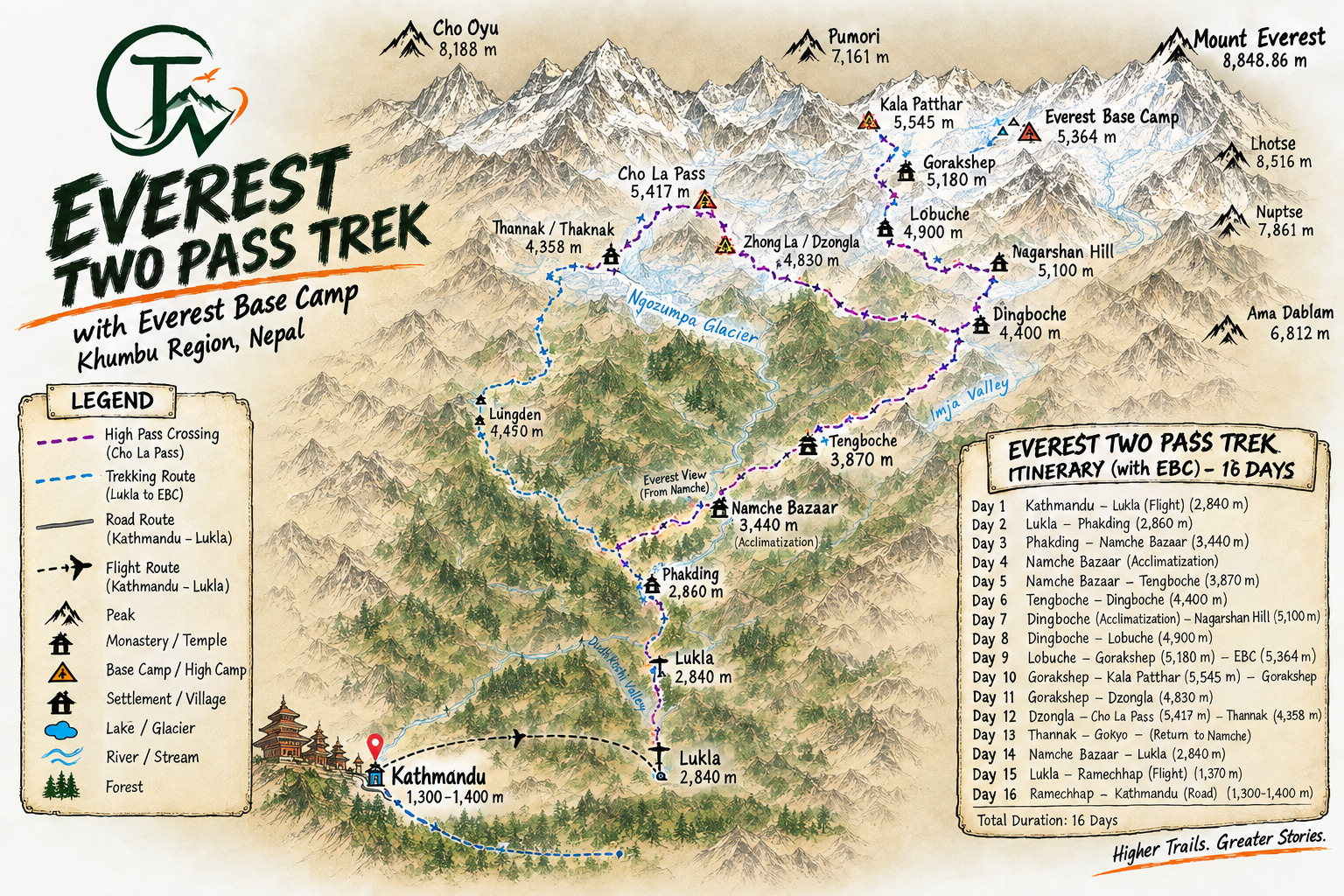
The Everest Two Pass Trek is a spectacular Himalayan adventure in Nepal’s Khumbu (Everest) region, typically crossing two famous high mountain passes such as Cho La Pass (5,420 m) and Kongma La Pass (5,535 m). It combines dramatic mountain scenery, Sherpa culture, glacial landscapes, and spiritual heritage.
Trekkers pass through ancient glaciers, moraines, deep U-shaped valleys, and rugged rock formations that continue to evolve through geological processes.
The Everest region is the ancestral homeland of the Sherpa people, who migrated from eastern Tibet around 500 years ago and developed a unique mountain culture. The area later gained worldwide fame through Himalayan exploration and Everest mountaineering expeditions.
The trek offers panoramic views of Mount Everest (8,848.86 m), Lhotse, Ama Dablam, Cho Oyu, and other Himalayan giants. Highlights include turquoise glacial lakes, icefalls, alpine meadows, rivers, glaciers, and breathtaking sunrise and sunset vistas. Much of the route lies within Sagarmatha National Park, a UNESCO World Heritage Site.
The region is deeply influenced by Tibetan Buddhism. Along the trails are monasteries, chortens, prayer wheels, mani walls, and colourful prayer flags. Sacred mountains are revered, and trekkers are encouraged to respect local customs and religious sites.
The trek passes through traditional Sherpa villages such as Namche Bazaar, Tengboche, Dingboche, and Khumjung. The Sherpa community is renowned for its hospitality, mountaineering skills, unique language, traditions, festivals, and high-altitude lifestyle.
Domestic animals like yaks and dzopkyos are essential for transport and local livelihoods. Wildlife found in the region includes Himalayan tahr, musk deer, Himalayan monal (Nepal’s national bird), pheasants, and the elusive snow leopard.
Tap a day to expand the details.
The adventure begins with an early morning transfer to Kathmandu Airport for a scenic flight to Lukla, the gateway to the Everest region. The flight to Tenzing-Hillary Airport takes approximately 35–40 minutes and offers spectacular views of the Himalayan mountain range. After landing at Lukla, we meet the trekking crew, organize our belongings, and begin our trek through the beautiful Sherpa villages of the Khumbu region.
The trail gradually passes through traditional settlements, including Chaurikharka and Cheplung, where we get our first views of the Dudh Koshi River. From Cheplung, the trail follows the valley northward through forests and small settlements before reaching Phakding. This relatively short first day allows us to become accustomed to the mountain environment. We enjoy the peaceful surroundings and spend the night at a local teahouse in Phakding.
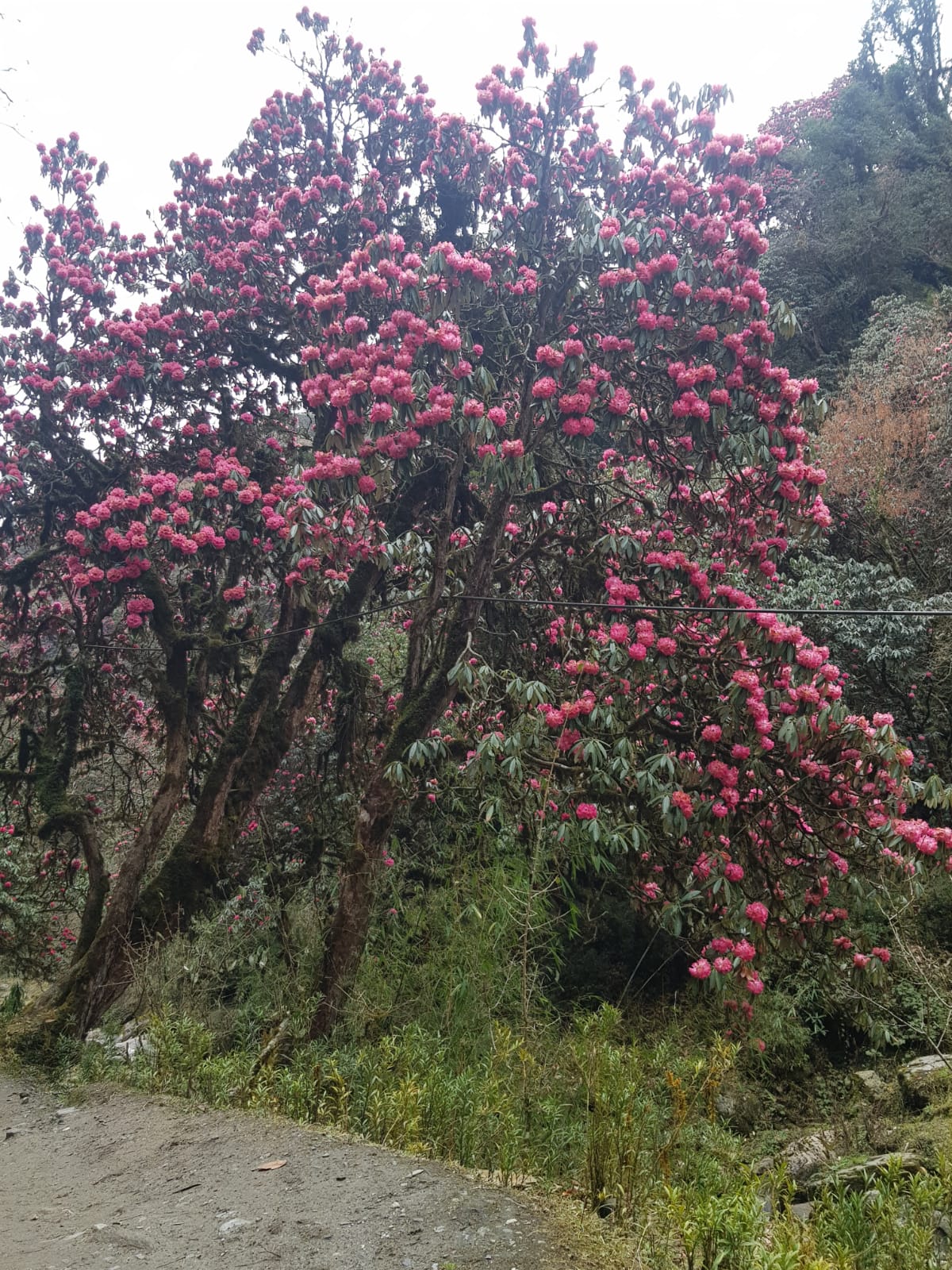
After breakfast, we continue our trek along the Dudh Koshi River toward the famous Sherpa town of Namche Bazaar. The trail passes through beautiful pine and rhododendron forests and crosses several suspension bridges decorated with colorful prayer flags.
We enter Sagarmatha National Park at Monjo, where permits are checked before continuing toward Jorsalle. From Jorsalle, the trail follows the river and eventually reaches the famous Hillary Suspension Bridge. From here, the trail becomes steeper as we climb toward Namche Bazaar.
The final ascent is rewarded with the first views of Everest and other magnificent peaks, weather permitting. Namche Bazaar is the commercial and cultural center of the Khumbu region, with shops, bakeries, cafés, lodges, and traditional Sherpa houses. We spend the night in Namche and prepare for our acclimatization day.
Today is an important acclimatization day before gaining more altitude. Rather than remaining completely inactive, we take a short hike to higher elevations and return to Namche to help our bodies adjust to the thin mountain air.
After breakfast, we hike toward the Everest View Hotel at approximately 3,880m. From the viewpoint, we can enjoy spectacular panoramic views of Mount Everest, Lhotse, Nuptse, Ama Dablam, Thamserku, Kongde and other surrounding peaks.
We then return toward Namche. Depending on energy levels, there is also an opportunity to explore the Sherpa Museum, visit the local market, or simply relax at a café while enjoying the mountain scenery. Overnight at Namche Bazaar.
After breakfast, we leave Namche and follow the scenic trail overlooking the Dudh Koshi Valley. This section of the trek provides some of the finest views of Everest, Lhotse, Nuptse, Ama Dablam, Thamserku and Kwangde.
The trail initially follows a relatively comfortable path before descending through beautiful rhododendron, pine and fir forests toward Phunki Tenga. After crossing the Dudh Koshi River, we begin a steady uphill climb toward Tengboche.
Tengboche is one of the most important cultural and religious settlements in the Everest region. The village is famous for Tengboche Monastery, one of the largest and most significant monasteries in the Khumbu. We have time to visit the monastery and observe the traditional Buddhist surroundings while enjoying magnificent views of Ama Dablam and the surrounding Himalayas. Overnight at Tengboche.
We begin the day by descending through beautiful forests toward Deboche and crossing the Imja Khola. The trail then gradually climbs through Pangboche, one of the oldest permanent Sherpa settlements in the region.
As we continue, the landscape changes noticeably. The dense forests gradually disappear and the trail enters the alpine zone, with open valleys, rocky terrain and increasingly dramatic mountain views. Ama Dablam dominates the landscape as we walk deeper into the Imja Valley.
After several hours of trekking, we reach Dingboche, a beautiful stone-walled village surrounded by fields. Dingboche is an important acclimatization stop and is also the gateway to Chhukung and several high mountain routes. We settle into our teahouse and prepare for another acclimatization day. Overnight at Dingboche.
Today is another essential acclimatization day. We spend the day around Dingboche and make a gradual hike toward Nagarshan Hill, reaching approximately 5,100m depending on weather, trail and group conditions.
The climb provides an excellent opportunity to gain altitude during the day while returning to Dingboche for a lower-altitude overnight stay. From the higher slopes, there are impressive views of Ama Dablam, Island Peak, Lhotse, Makalu and the surrounding Himalayan peaks.
After spending some time enjoying the mountain scenery, we descend carefully back to Dingboche. The remainder of the afternoon can be spent resting, hydrating and preparing for the higher-altitude section of the trek. Overnight at Dingboche.
After breakfast, we leave Dingboche and continue toward the Everest Base Camp area. The trail climbs gradually through the alpine landscape toward Dughla.
From Dughla, we make a more challenging ascent toward the ridge containing memorials dedicated to climbers and Sherpas who lost their lives on Himalayan expeditions. The memorials, surrounded by prayer flags and stones, provide a quiet and moving reminder of the challenges of climbing in the Everest region.
We then continue along the moraine of the Khumbu Glacier, with magnificent views of Pumori, Khumbutse, Lingtren and other Himalayan peaks. The landscape becomes increasingly rugged as we approach Lobuche. After reaching the settlement, we check into our teahouse, have dinner and rest for the next day's journey toward Everest Base Camp. Overnight at Lobuche.
Today is one of the major highlights of the trek. After an early breakfast, we leave Lobuche and follow the rugged trail toward Gorakshep. The path crosses rocky moraine terrain alongside the Khumbu Glacier, with spectacular views of Pumori, Nuptse, Khumbutse and other surrounding peaks.
After reaching Gorakshep, we check into our lodge, have some food and prepare for the hike to Everest Base Camp. We then continue across the rocky and glacial landscape toward the base camp. The trail can be challenging because of the altitude and uneven moraine terrain, so we maintain a slow and steady pace.
After reaching Everest Base Camp, we have time to explore the area, admire the Khumbu Glacier and Icefall, and take photographs. During the climbing season, the atmosphere around base camp can be particularly exciting as expedition teams prepare for their summit attempts.
After enjoying this incredible achievement, we retrace our steps back to Gorakshep for an overnight stay.
We start early in the morning for the famous hike to Kala Patthar, one of the best viewpoints in the Everest region. The ascent is gradual but challenging because of the high altitude. Reaching the summit around sunrise provides spectacular panoramic views of Mount Everest, Nuptse, Pumori, Ama Dablam and the surrounding Himalayan range.
After spending time at the viewpoint and taking photographs, we descend back toward Gorakshep for breakfast. We then begin our journey toward the remote settlement of Zhong La, leaving the main Everest Base Camp trail behind.
The route becomes quieter and more rugged as we approach the high-pass region. We cross dramatic mountain terrain with magnificent views of the surrounding peaks and glaciers before reaching Zhong La. This is an important preparation for the following day's crossing of Cho La. Overnight at Zhong La.
Today is one of the most challenging and exciting days of the entire trek as we cross the famous Cho La Pass. We start early because weather conditions around the high pass can change quickly.
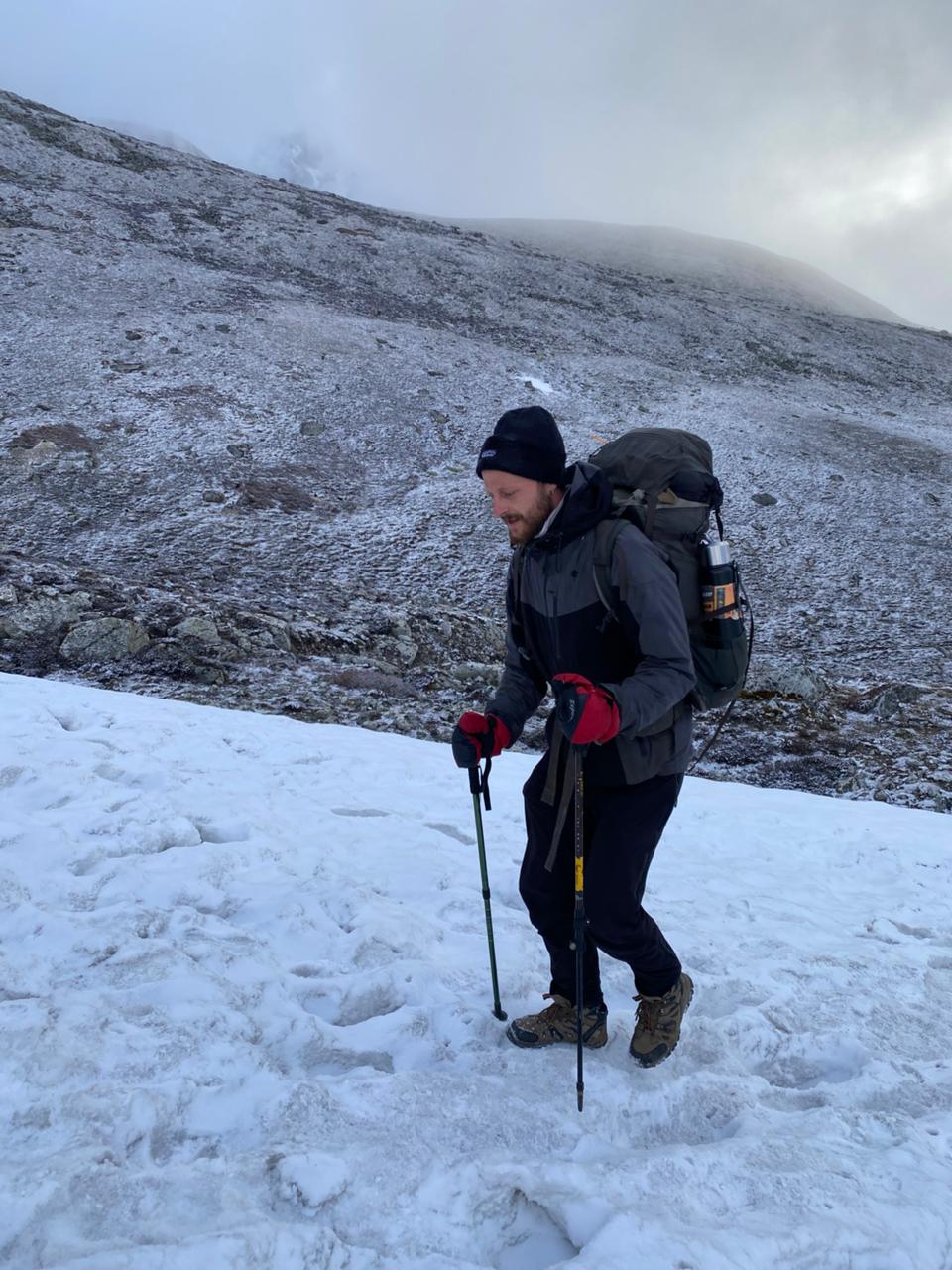
The trail climbs gradually over rocky terrain toward the Cho La Pass. As we gain altitude, the landscape becomes increasingly barren and glacial. The final section toward the pass can be steep and may involve crossing icy or rocky surfaces depending on the season and conditions.
Reaching Cho La at approximately 5,417m is a major achievement. From the top, we are rewarded with spectacular views of Ama Dablam, Cholat
Altitude sickness can occur when your body struggles to adjust to high elevations and lower oxygen levels. During the Annapurna Base Camp Trek, you may experience symptoms such as headache, dizziness, nausea, tiredness, or difficulty sleeping. Stay hydrated, ascend gradually, and inform your guide immediately if you feel unwell. Planning your Annapurna Base Camp adventure with an experienced local trekking company can make your journey more organized and enjoyable. If you are looking for a trusted trekking company in Nepal, our team at Mountain Mate Trek is available to help you plan and experience your Himalayan adventure at www.mountainmatetrek.com
No reviews of this trek yet — if you have trekked it, yours would be the first.
Log in to share your experience of this trek.