5 Groups Available
Mera Peak Climbing is one of the most rewarding Himalayan climbing adventures in Nepal, combining high-altitude trekking, mountaineering, and spectacular mountain scenery in the remote Everest region. Standing at 6,476 meters (21,246 feet), Mera Peak is one of Nepal’s highest trekking peaks and is a popular choice for climbers seeking their first Himalayan summit experience.
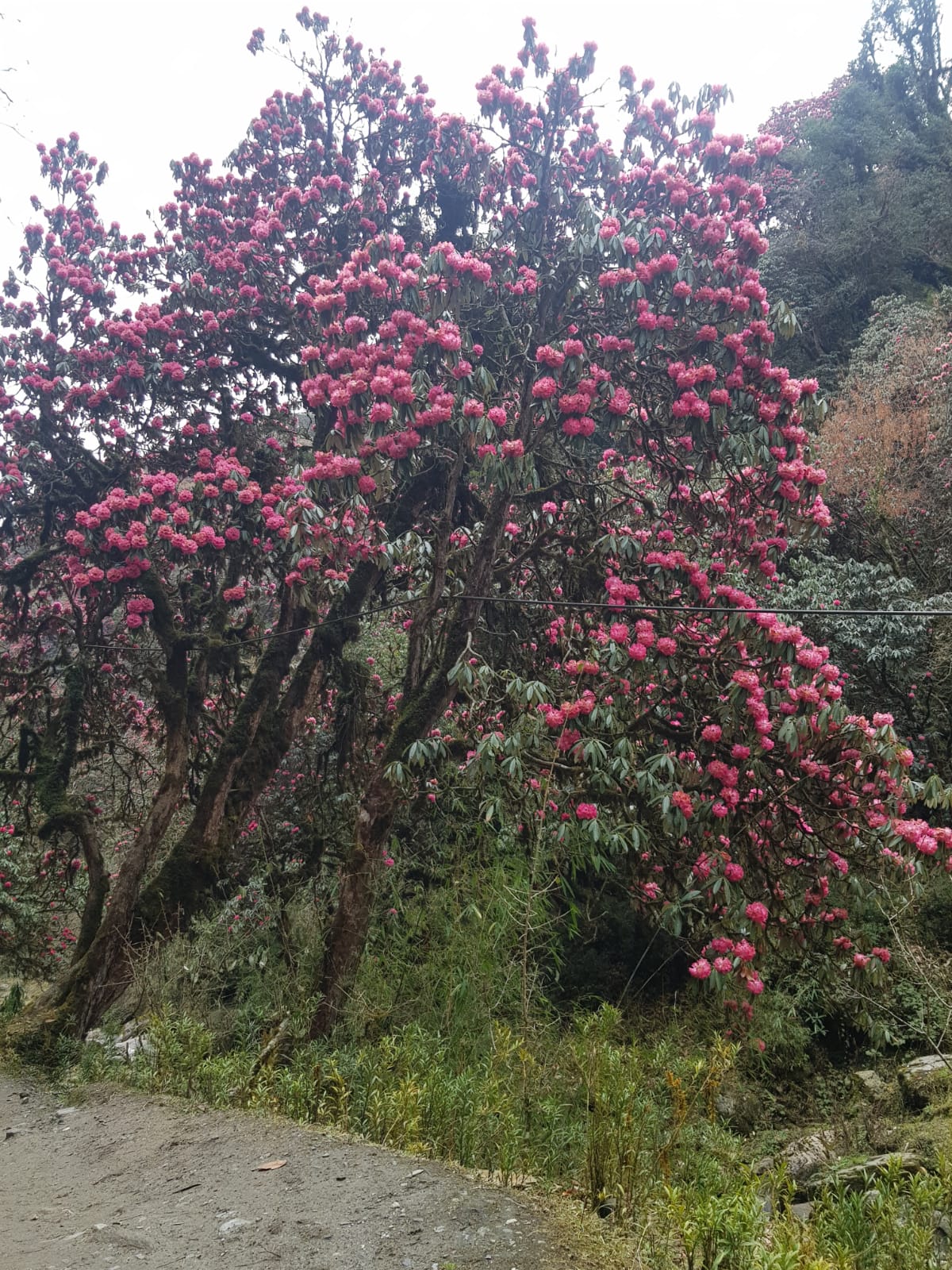
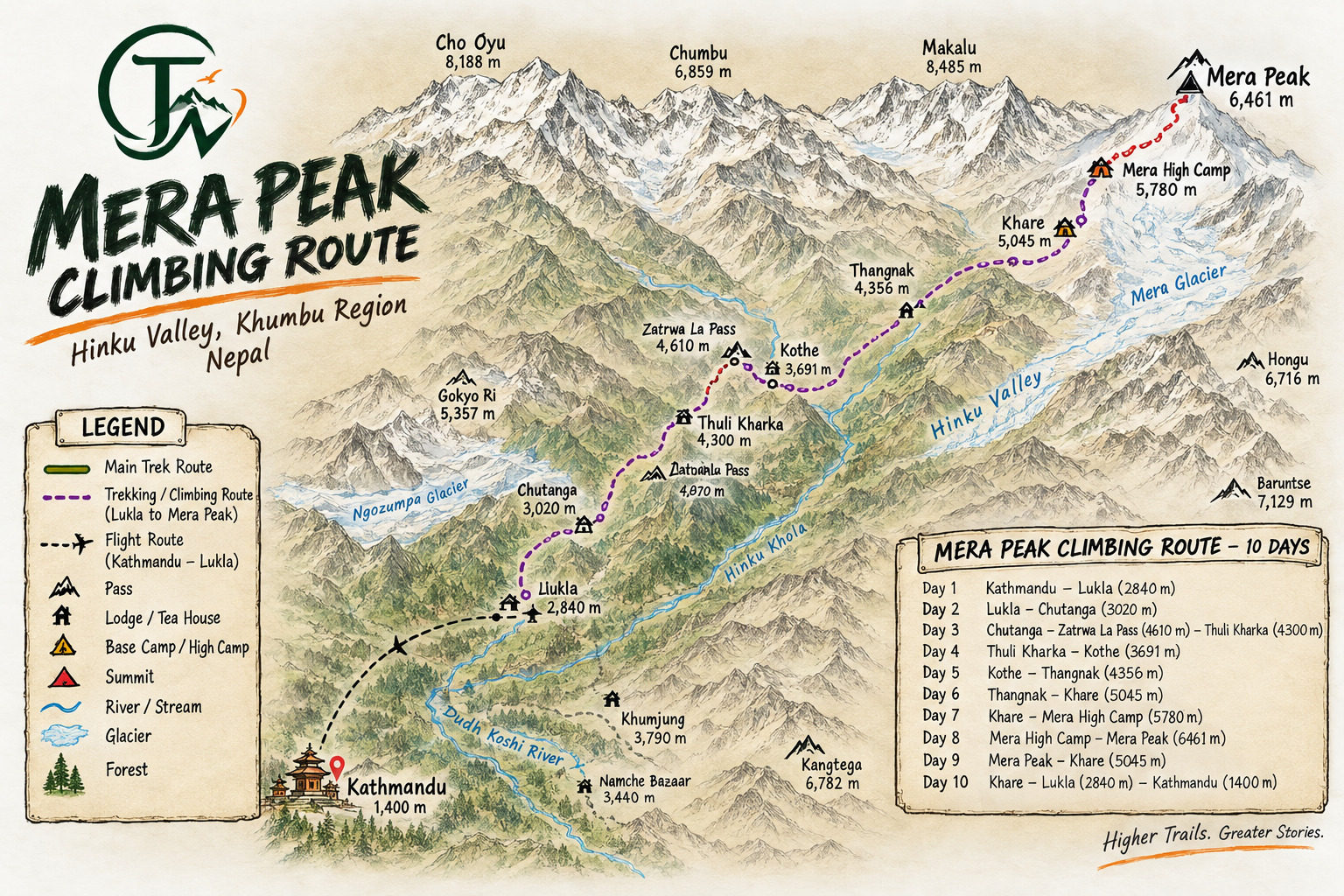
Located in the Mahalangur Himal of eastern Nepal, the Mera Peak route takes climbers through the beautiful Khumbu and Hinku Valley landscapes. The adventure begins with a scenic flight to Lukla, followed by a trek through traditional Sherpa settlements, dense rhododendron forests, alpine meadows, remote valleys, and high-altitude terrain. The gradual ascent provides valuable opportunities for acclimatization before reaching Mera Base Camp and High Camp.
One of the major highlights of Mera Peak Climbing is the panoramic Himalayan view from the summit. On a clear day, climbers can see some of the world's most iconic mountains, including Mount Everest, Lhotse, Makalu, Cho Oyu, and Kanchenjunga. The combination of towering peaks, glaciers, dramatic valleys, and remote Himalayan wilderness makes the expedition an unforgettable Nepal adventure.
Although Mera Peak is considered a relatively straightforward trekking peak from a technical mountaineering perspective, reaching the summit requires good physical fitness, proper acclimatization, suitable mountaineering equipment, and professional guidance. The summit route can involve snow, ice, glaciers, crampons, ropes, and an ice axe, particularly during the final ascent. The high altitude also makes preparation and altitude awareness essential.
The Mera Peak Climbing itinerary generally includes several acclimatization and trekking days, allowing climbers to gradually adapt to increasing elevation. Depending on the chosen route and itinerary, the journey may pass through destinations such as Lukla, Paiya, Panggom, Ningsow, Chhatra Khola, Kothe, Thangnak, Khare, Mera Base Camp, and Mera High Camp before the final summit attempt.
For adventure seekers looking for a combination of Nepal trekking, peak climbing, and authentic Himalayan culture, Mera Peak offers an excellent introduction to high-altitude mountaineering. Its spectacular summit views, remote trails, Sherpa communities, and challenging yet achievable ascent make Mera Peak Climbing a popular choice among trekkers and aspiring mountaineers visiting Nepal.
Tap a day to expand the details.
After an early breakfast, you will transfer to the domestic airport for a scenic mountain flight to Lukla. The short yet dramatic flight offers breathtaking views of the Himalayan range before landing at Tenzing-Hillary Airport. Upon arrival, you will meet your trekking crew and begin your journey with a gentle uphill walk toward Chutanga. The trail passes through dense pine and rhododendron forests, allowing your body to gradually adjust to the altitude. After a short and pleasant hike, you will reach Chutanga, where you will stay overnight at a local lodge.
Today’s trek is challenging yet rewarding as you cross the Zatrawala Pass. After breakfast, the trail ascends steadily above the tree line, offering expansive views of alpine landscapes. Reaching the pass, you will be rewarded with panoramic mountain scenery. After a brief rest, the trail descends toward Thuli Kharka through open terrain and yak pastures. Careful pacing is essential due to the altitude gain. Overnight at a lodge in Thuli Kharka.
After breakfast, the trail descends through forests of rhododendron, bamboo, and pine. You will cross several streams and follow the Hinku River as the landscape gradually becomes greener. The walk is pleasant and less demanding compared to previous days. By afternoon, you will arrive at Kote, a beautiful settlement in the Hinku Valley. Overnight at a local lodge.
Leaving Kote, the trail follows the Hinku River upstream through narrow valleys and open alpine terrain. As you gain altitude, the vegetation becomes sparse and the mountain views grow more dramatic. You may spot yaks grazing along the trail. After a gradual ascent, you will reach Thangnak, a seasonal settlement used by climbers. Overnight at a lodge in Thangnak.
After breakfast, you continue ascending along the moraine of the Dig Glacier. The trail offers impressive views of glaciers and surrounding peaks. The air becomes thinner as you approach Khare Camp, located at the base of Mera Peak. The afternoon is spent resting, hydrating, and preparing for the upcoming climb. Overnight at Khare Camp.
This day is dedicated to acclimatization and basic mountaineering training. Your climbing guide will provide instruction on the use of climbing equipment such as crampons, harnesses, ropes, and ice axes. Short practice sessions help build confidence and improve safety for summit day. The rest of the day is spent relaxing and adjusting to the altitude. Overnight at Khare Camp.
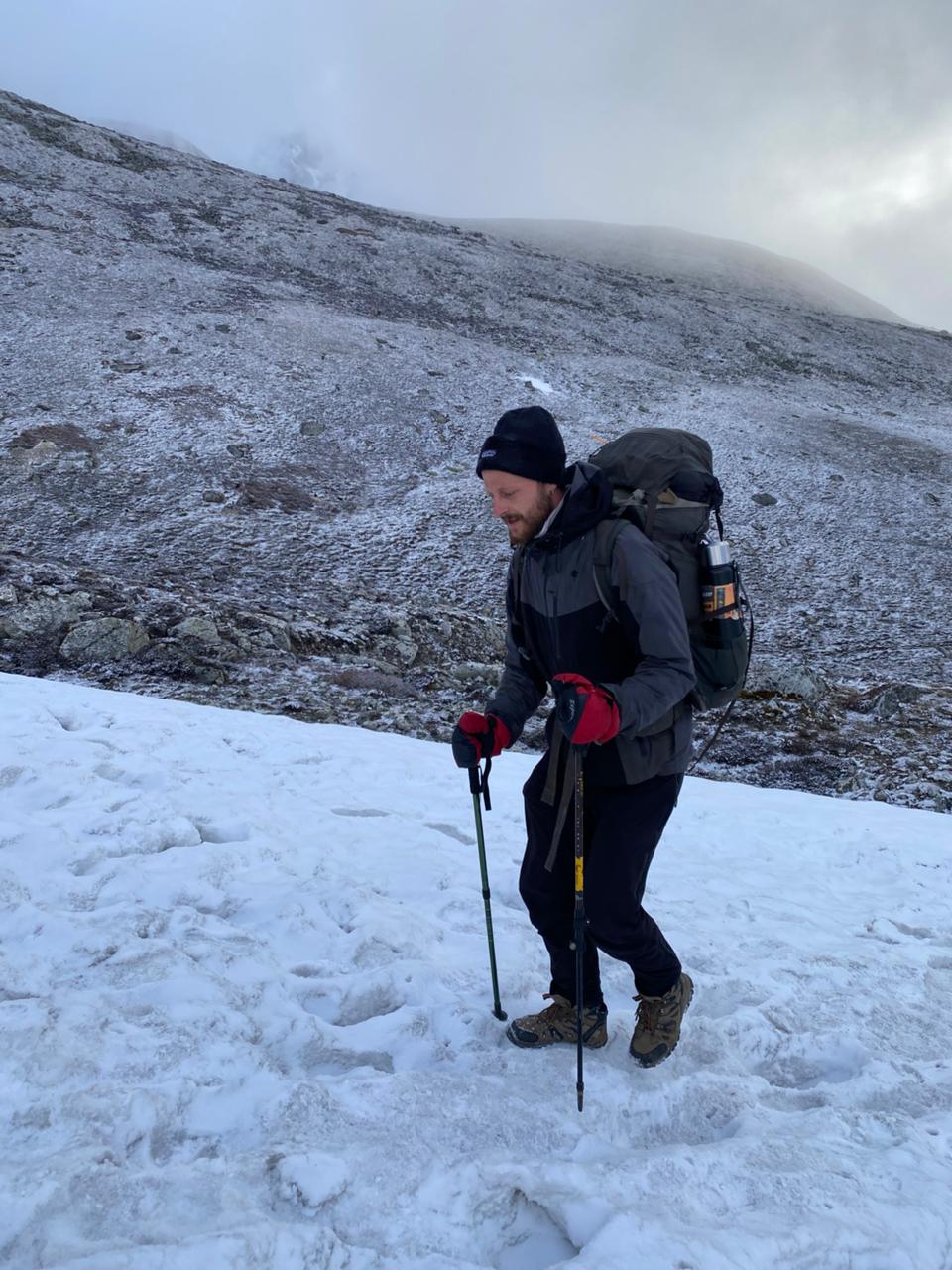
After breakfast, the trail climbs steeply over rocky terrain and snow-covered slopes. Fixed ropes may be used in steeper sections. The ascent is slow and steady due to the high altitude. Upon reaching High Camp, you will be rewarded with stunning views of Everest, Makalu, Lhotse, and Cho Oyu. After an early dinner, you rest and prepare for the summit attempt. Overnight at High Camp.
Summit day begins around midnight. Equipped with headlamps and climbing gear, you ascend gradually over snow and ice. The climb is physically demanding but technically straightforward. Reaching the summit of Mera Peak, you will witness one of the most spectacular panoramic views in the Himalayas. After spending some time at the summit, you carefully descend back to High Camp and continue down to Khare Camp. Overnight at Khare.
A spare day is built into every Mera Peak programme, because summit day depends on weather that no itinerary can promise. High winds, fresh snow on the upper slopes, or a member of the group needing another day to acclimatise are all reasons your guide may hold the team at Khare and push the attempt back twenty-four hours. If the summit went to plan, the day is yours to rest and rehydrate at 5,045m, with short walks on the moraine above camp for anyone still feeling strong. Either way it is time well spent, and it is a large part of why climbers come home with a summit rather than a weather story.
The descent from Khare gives back in a few hours the altitude that took days to gain, and the change is immediate: the air thickens, walking becomes easy again and appetite returns. The trail drops along the moraine and rejoins the Hinku River, following it down past Thangnak and into the first scrub juniper and rhododendron you have seen in a week. Yak pastures reappear, then the treeline, and the valley walls close in with the sound of running water. Kote sits among the trees at 3,691m, and the evening there is usually the most relaxed of the trip.
Leaving the Hinku Valley behind, the trail turns uphill through forest for most of the morning, climbing steadily on switchbacks beneath rhododendron and pine. It is a long day rather than a hard one, and the gradient is kind compared with anything above Khare. As you gain height the forest thins into open kharka, the seasonal grazing grounds that give Thuli Kharka its name, and the views reopen across the valley towards Mera and Kusum Kanguru. The camp sits on an exposed shelf at 4,300m, cold once the sun drops behind the ridge, but with a clear outlook for the pass crossing ahead.
The last full day in the mountains starts early for the second crossing of Zatrwa La. The climb to the pass takes two to three hours over rocky ground and often old snow, and the top gives you a final panorama back over the Hinku Valley and the peaks you have been living among. From there it is a long, knee-testing descent of more than 1,700 metres, first over boulders and then into forest, with Lukla’s rooftops appearing far below long before you reach them. Arriving in Lukla means a hot shower, a proper meal and the traditional last evening with your guides and porters.
The climbing is behind you and the last morning in the mountains is an early one, as Lukla’s flights leave before the wind picks up. The short flight back to Kathmandu traces the ridgelines you walked in on, with the Dudh Koshi valley falling away beneath the wing and the Khumbu peaks standing clear on the horizon in good weather. After landing you are transferred to your hotel, where the rest of the day is free to shower, repack, shop in Thamel or simply rest. Your guide and crew say their goodbyes here, and there is usually time for a last meal together in the evening.
Altitude sickness can occur when your body struggles to adjust to high elevations and lower oxygen levels. During the Annapurna Base Camp Trek, you may experience symptoms such as headache, dizziness, nausea, tiredness, or difficulty sleeping. Stay hydrated, ascend gradually, and inform your guide immediately if you feel unwell. Planning your Annapurna Base Camp adventure with an experienced local trekking company can make your journey more organized and enjoyable. If you are looking for a trusted trekking company in Nepal, our team at Mountain Mate Trek is available to help you plan and experience your Himalayan adventure at www.mountainmatetrek.com
1 review
Log in to share your experience of this trek.
sharon
I had an amazing experience trekking to Mera Peak with Trekkings Nepal. The entire journey was well organized, from the planning and permits to accommodation and logistics. The guides were experienced, friendly, and supportive throughout the trek, especially during the challenging sections and summit day.
The views of the Himalayas were absolutely breathtaking, and reaching the summit of Mera Peak was an unforgettable achievement. I really appreciated the team’s professionalism, safety-conscious approach, and genuine care for trekkers.
Highly recommended for anyone planning a Mera Peak adventure in Nepal! 🏔️🥾